
Criminal Court Cases in Randolph County
Randolph County belongs to Georgia's seven-county Pataula Judicial Circuit. The official circuit site routes users to its courts, calendar, judges, district attorney, public defender, forms, and video-hearing information. Randolph Superior Court has exclusive felony trial jurisdiction. Its clerk preserves the criminal docket and public filed papers, including charging instruments, motions, orders, pleas, judgments, and sentencing records.
A citation, bond paper, warrant, or hearing notice should name the court. Use that name before calling. Magistrate Court can handle early warrant and hearing activity. Probate or municipal courts may hold matters within their jurisdiction. A Superior Court search alone can miss a lower-court file, while a lower-court inquiry cannot establish the outcome of a felony prosecution that moved to Superior Court.
Randolph County Clerk Criminal Desk
The Randolph County Clerk of Superior Court is the direct source for filed felony case records. The Pataula courthouse and clerk directory identifies the local courthouse channel. Contact the clerk at 93 Front Street, Cuthbert, GA 39840, or (229) 732-2216. Ask whether a case exists, whether it remains pending, and which public documents can be copied.
Randolph County Clerk of Superior Court
93 Front Street
Cuthbert, GA 39840
(229) 732-2216
Call first to confirm counter hours, search procedures, copy charges, certification cost, payment method, and remote delivery options.
No accessible official county page posted those service details during the research inspection. That gap makes a short advance call important. Request the docket sheet first when a file may be large. It can show document titles and filing dates so the copy order stays focused.
Randolph County Case Record Searches
Start with the court, not a broad name match. A useful request includes the defendant's full name, name variants, date of birth when the clerk accepts it, approximate filing date, and case number if known. Then separate a pending charge from a final outcome.
- Read the citation, bond paper, or notice and identify the named court.
- Call the correct clerk and ask for the case number and present status.
- Request the docket sheet before ordering a long case file.
- Review the charging document, plea or verdict, judgment, and sentence together.
- Confirm certification cost if an official copy is required.
For a broader overview of local sources, the Randolph County criminal history page distinguishes court files from sheriff, state-repository, and corrections records.
PeachCourt Access in Randolph County
Georgia Courts lists Randolph Superior Court as mandatory for electronic filing through PeachCourt. That fact confirms the filing channel. It does not promise a free, complete public name search or full access to old criminal files.
| Access item | Verified Randolph finding |
|---|---|
| Court coverage | Randolph Superior Court is listed for mandatory e-filing. |
| Login | Account or interactive access may be required. |
| Search fields | Not reliably visible in the public static view. |
| Fees | Not posted on the judiciary county table; vendor charges may apply. |
| Historic files | Coverage is not stated for Randolph County. |
The PeachCourt gateway may assist with electronic documents, but the clerk remains the key fallback for paper files, restricted material, and any record the vendor does not expose.
The Georgia Courts e-filing interface helps explain Randolph County's electronic route.
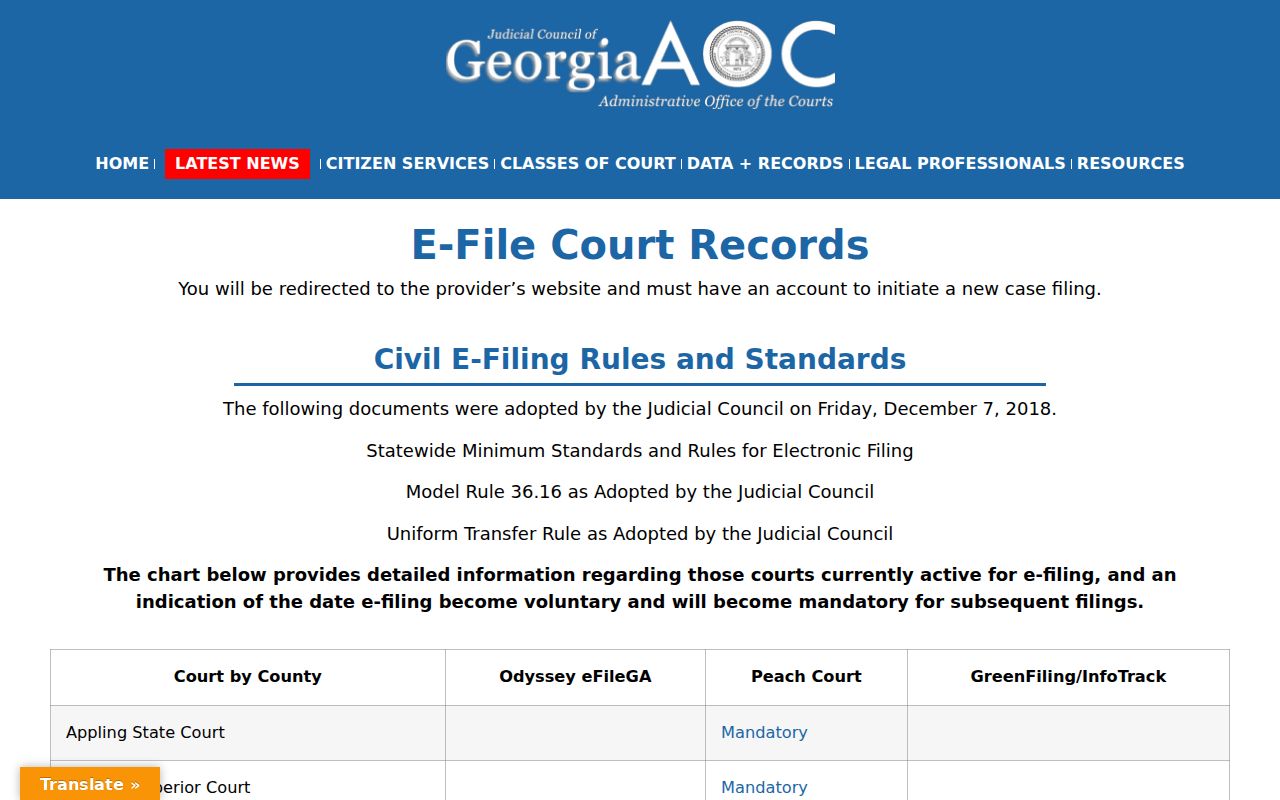
Its county listing verifies infrastructure, while the local clerk verifies what a reader can actually inspect or buy.
What a Criminal Case File Contains
A court case file records what prosecutors filed and what the judge or jury did. It should be read as a timeline. One docket event rarely supplies the whole result.
| Case identity | Case number, court, filing date, status, and assigned judge. |
|---|---|
| Parties | State of Georgia, defendant, and attorney appearances. |
| Charges | Indictment, accusation, or other filed charging instrument and counts. |
| Proceedings | Motions, notices, continuances, hearings, and orders. |
| Outcome | Plea, verdict, dismissal, nolle prosequi, or other disposition. |
| Sentence | Judgment and public confinement or probation terms. |
“Nolle prosequi” means the prosecutor formally chose not to proceed on a charge. It is not a conviction. A dismissal, acquittal, and guilty plea also have distinct effects. Verify each count because several counts in one Randolph County case can end differently.
The official public-defender locator provides another view of the Pataula Circuit's court structure.
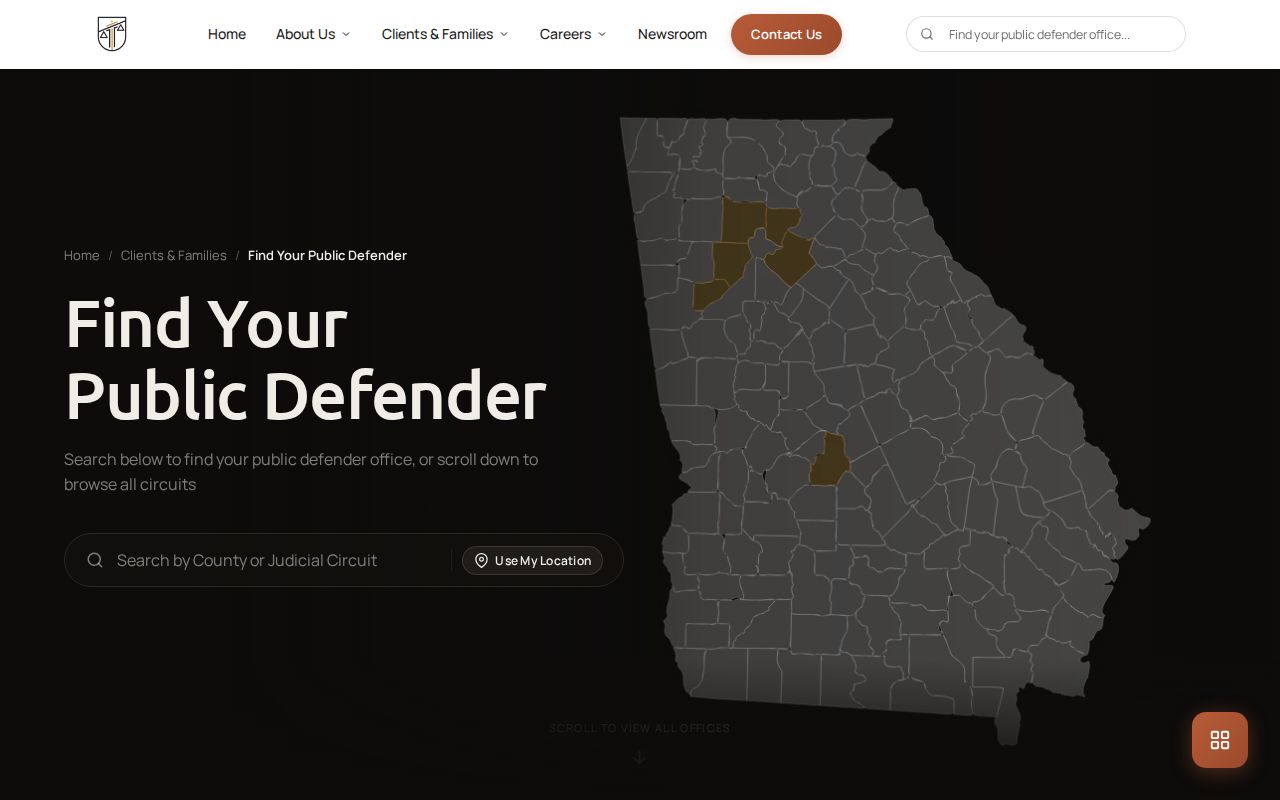
That office assists eligible represented people, but the clerk remains the keeper of the public docket.
Which Randolph Court Holds It?
A common search error is treating all courthouse records as one file. The arresting officer may begin in one court, a felony may be bound over, and Superior Court may receive the prosecution later. Bench-warrant or capias events may appear on a docket, but the sheriff holds its own execution records.
- Arraignment
- The hearing where filed charges are stated and a plea is entered.
- Disposition
- The result for a charge, such as conviction, dismissal, acquittal, or nolle prosequi.
- Capias
- A court order directing that a person be taken into custody, often tied to a missed court duty.
- Docket
- The chronological list of filings and court events in a case.
The Pataula Circuit calendar can help locate a scheduled session, but schedules change. Confirm the date with the clerk rather than treating an online calendar as final.
Criminal Case Stages in Randolph County
A court record grows in stages. The core flow is:
Charges Filed → Arraignment → Pretrial → Plea or Trial → Disposition → Sentencing
Not every case reaches trial or sentencing. Charges may be amended or dismissed. Motions and continuances can add time between steps. The docket date shows when an event was entered, while the attached order or judgment supplies its legal effect.
The official PeachCourt gateway illustrates the vendor side of that filing flow.

Electronic filing moves papers into the court system, but it does not turn every filing into an unrestricted public document.
Note: A booking date and court filing date may differ because prosecutors decide what charges, if any, enter the docket.
When Randolph Case Data Conflicts
Names, dates, and charge labels can differ between an incident report, jail sheet, and court docket. Begin with a case number. Compare the charging instrument with the final judgment, not just an early calendar entry. If a disposition seems absent, ask the clerk whether it was entered under another count, case number, or court.
The Georgia Bureau of Investigation's repository receives reported arrest and disposition data, but the clerk's original file is the best source for what Randolph County Superior Court filed. A repository delay or mismatch does not change the judgment. Corrections data answers a separate custody question.
The Georgia Open Government page summarizes access under the Georgia Open Records Act.
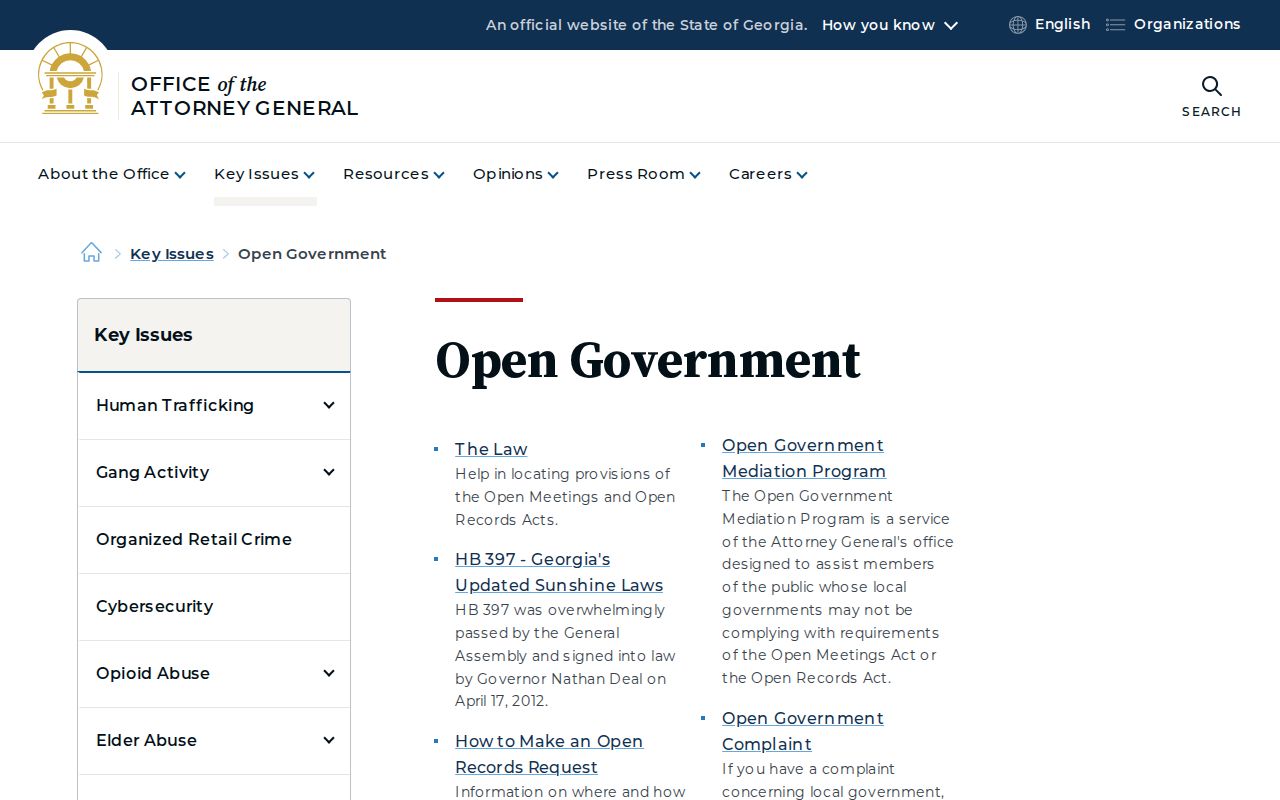
Its guidance is useful when identifying a custodian, though court-record rules and judicial restrictions still control particular case papers.
Access Rules for Case Records
Public access does not mean every page is open. Sealed matters, juvenile files, victim-sensitive material, and data protected by law may be withheld or redacted. Older paper records may require staff retrieval. The clerk can explain inspection and copying options but cannot provide legal advice.
The Georgia Open Records Act generally requires an agency response within three business days when records are available. If production takes longer, the agency should provide a timetable and cost estimate. That response rule is not a promise that a large or redaction-heavy request will be complete in three days.
The General Assembly's official legislation interface is the source for current Georgia statutory text.
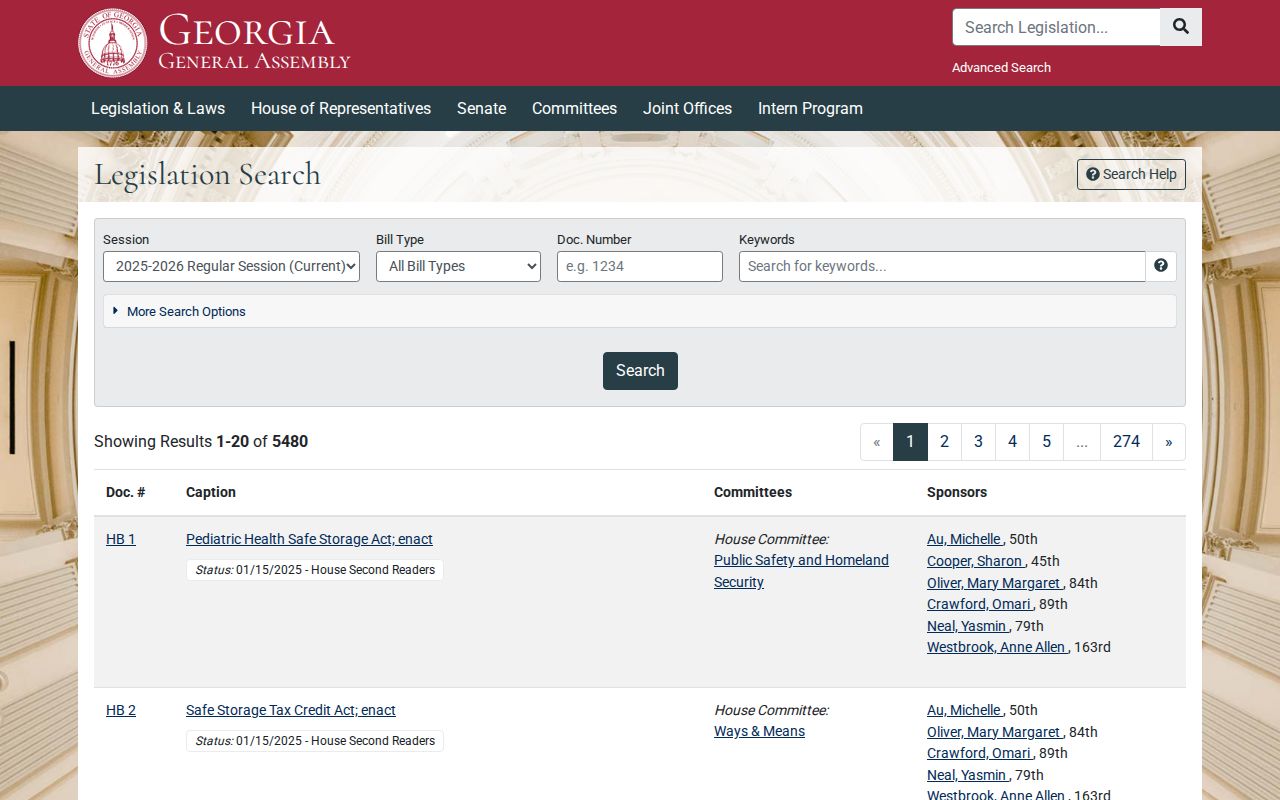
Checking current text matters when a restriction, sealing rule, or disclosure exception affects a Randolph County case.
Note: Call before visiting because Randolph County does not publish complete counter hours, payment rules, or copy fees on an accessible official page.